Cusumano 2021 Insolia (Terre Siciliane IGT)

Fresh off the delicious organic Catarratto, I opened this relatively cheap ($16) of Insolia and was immediately on edge when I saw the color.

WINE KNOW: Insolia (or Inzolia) is a “very old native” white grape of Sicily. Ian d’Agata in Native Wine Grapes of Italy, says that the correct name of the variety is Ansonica, “which derives from the French sorie (dark, gold) because Ansonica grapes turn golden when very ripe.” It’s a low-acid grape, so not well suited to the warm/hot climates of Sicily, but that’s where it is grown the most. Ian d’Agata also mentioned that Ansonica is “the rare example of a naturally tannic white wine.”

MY NOTES: I don’t know if it was on purpose (I’d guess that it is), but the label color matches the color of the wine: a sort of orange-gold. So this is either a skin contact wine, or it was allowed to oxidize a bit, or it’s just off. Just before tasting it, I read this in The World of Sicilian Wine by Nesto and di Savino, “Inzolia wine has a tendency to oxidize, which makes it useful as a base for Marsala.”
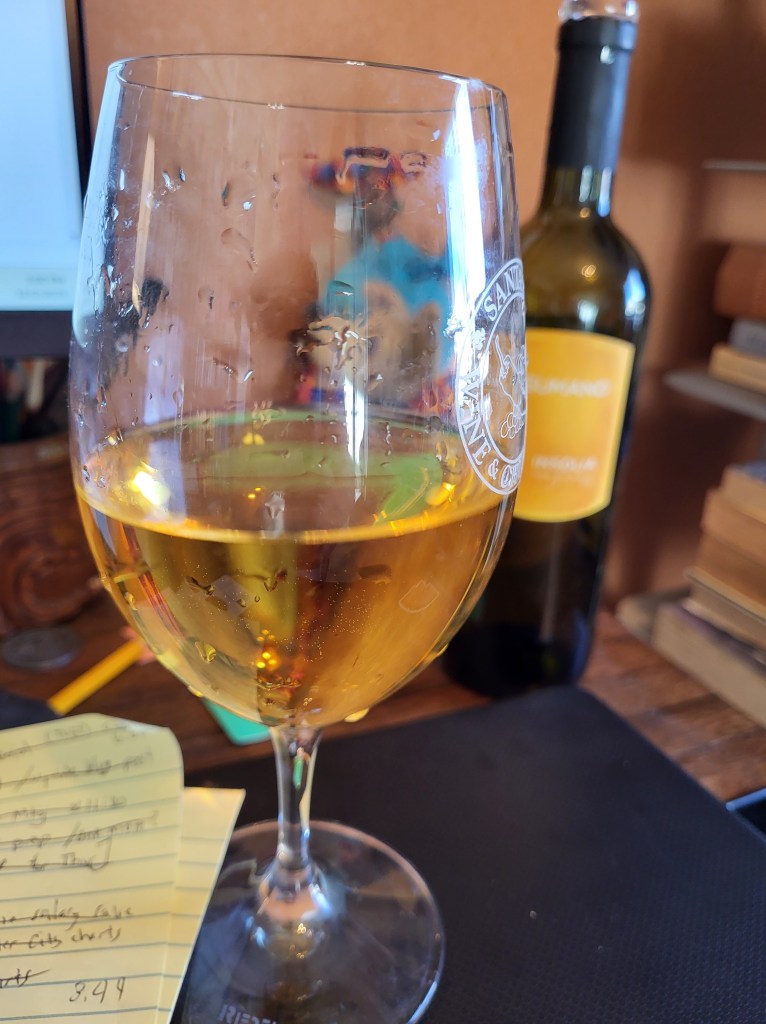
What bizarre flavors! A reluctant nose of apple, pear and a bit of lemon. On the palate, bruised apple, cider, bitter almond, a bitter herb, and black tea. Medium acidity, medium body, medium alcohol. The winemaker’s notes say it is “light straw” colored, but not my bottle! There is also a sort of fino sherry aspect to this wine.

PRICE: $16 on Wine.com

CRITICS: JS 91, WE 90

James Suckling – “This has aromas of waxed lemons, jasmine, thyme and stones. It’s medium-bodied with vibrant acidity. So fresh, with wild-thyme and fennel notes at the end.”

Definitely not fresh tasting to me. Makes me think mine was just oxidized.

Wine Enthusiast – “Blooming carnations, Meyer lemons and sun tea come together to construct a very umami nose. The palate stays with the savory, offering notes of lemonade-iced tea and pine nuts with a sea salt finish.”

I’m with them on the pine nuts and sea salt. And actually now tasting it again, the lemon iced tea reference is really spot on. Like a Lemon Snapple, with the flavors and tannins from tea leaves.
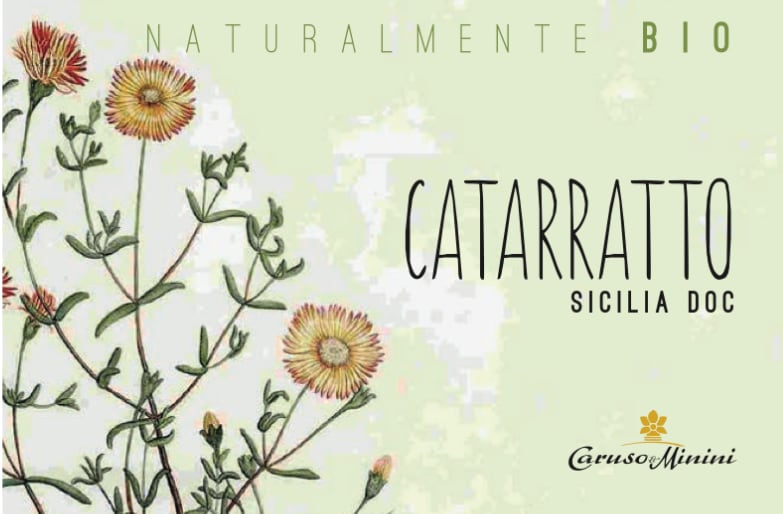
Caruso & Minini 2022 Naturalmente Bio Catarratto

Before we get into the taste of this wine, there’s a lot to explain:

  • Caruso & Minini are the producers (I recently learned that the common last name, Caruso, means ‘boy’ in Sicilian)
  • Naturalmente Bio means ‘naturally organic.’
  • Catarratto is a native white grape of Sicily. In the white wines of Mount Etna (Etna Bianco) it’s the blending partner with Carricante. (If you’ve been reading my other Sicilian wine reviews, you’d have noticed that many of the higher-end Etna Biancos are 100% Carricante.)
  • Catarratto is actually the 2nd-most-planted white variety in all of Italy! So why haven’t you heard of it? Because most of it ends up in Marsala wine.

This was a bit of set-up: I wanted my wife to try Planeta’s 100% Carricante “Eruzione” 1614 (Eruption), but I wanted her to taste a much cheaper Sicilian white beforehand. And I figured for $20, it would be a nice opportunity to taste Catarratto on its own.

MY NOTES: This wine smells like a tropically-styled New Zealand Sauvignon Blanc: pineapple, lemon/lime peel, even mango. But when you taste it, there is both an unexpected roundness and fullness (think Chardonnay) and much milder acidity than the nose suggests. This is a remarkable wine for the price, with sweet floral aromatics and a pleasing creaminess.

CRITICS: James Suckling gave this a 92. That’s an excellent $0.22/point, consistent with a very high-value wine.

“Aromas of waxed apples, grilled lemons, honeysuckle and praline. Some crushed stone minerality, too. It’s juicy and vibrant on the palate with fresh, fruity character and refreshing acidity. Medium body. Creamy and attractive. From organically grown grapes.”

CATARRATTO: I’d generally agree with the graphic below from Wine Folly…except that this particular Catarratto is absolutely full-bodied…like veering towards Fiano di Avellino full-bodied.

Conclusion: I’m excited to try some more single-varietal Catarrattos when we’re in Sicily!

Planeta 2021 Cerasuolo di Vittoria

A delicious introduction to Sicily’s sole DOCG (for now): Cerasuolo di Vittoria.

WINE KNOW: Planeta is the real last name of one of the most influential families in Sicilian wine. I’ll never forget the Planeta Chardonnay that I first tried at an oyster bar in Singapore. I even remember the label: a close-up of a smiling sun.

Cerasuolo di Vittoria is Sicily’s only DOCG. Vittoria (Victory) is a town on the southeastern coast. Cerasuolo di Vittoria DOCG must be a blend of 50-70% Nero d’Avola and 30-50% Frapatto. This particular blend is 60%/40%.

MY NOTES: I’ve had a few Cerasuolos (“cherry-coloreds”) before, but to be honest, I don’t remember them. So I’m like a virgin, and this wine tastes WILD. It’s a medium ruby with a crazy amount of fresh strawberry and raspberry flavors, but with an underlying spice-funk that for some reason reminded me of star anise and cinnamon – almost like a partially mulled wine.

CRITICS: James Suckling gave this a 92. “Black cherry and sliced blood-orange aromas. Medium to full body, orange-peel undertones and a juicy finish. Clean, focused, and real. Delicious all round. From organically grown grapes.”

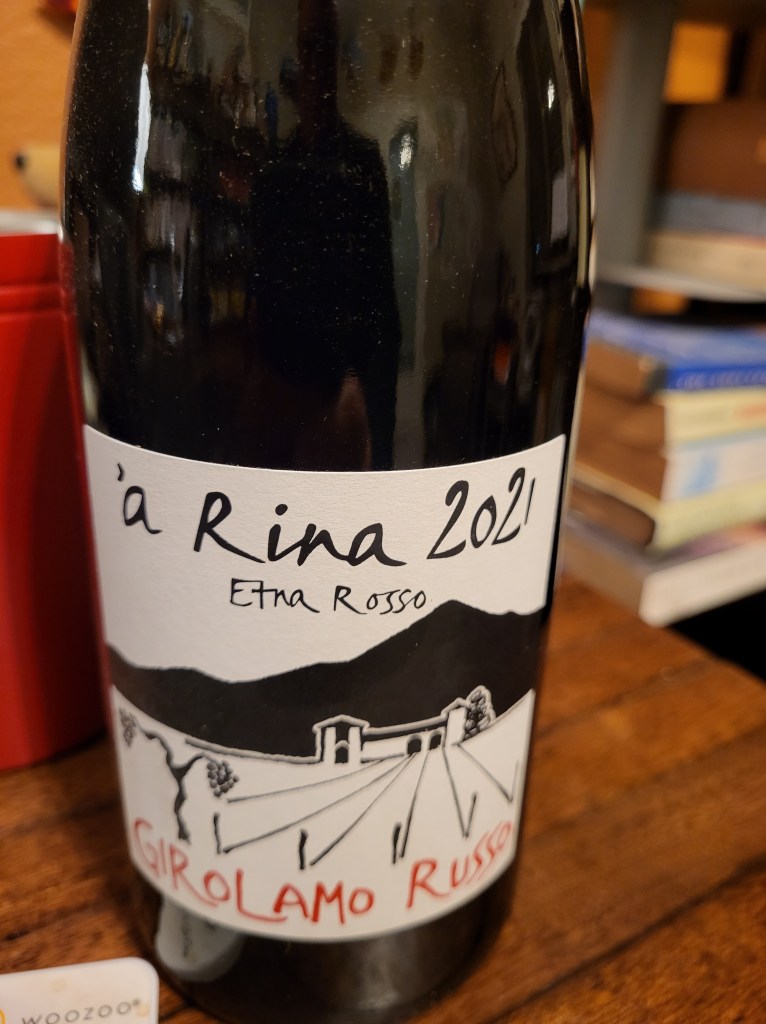
Girolamo Russo ‘a Rina 2021 Etna Rosso

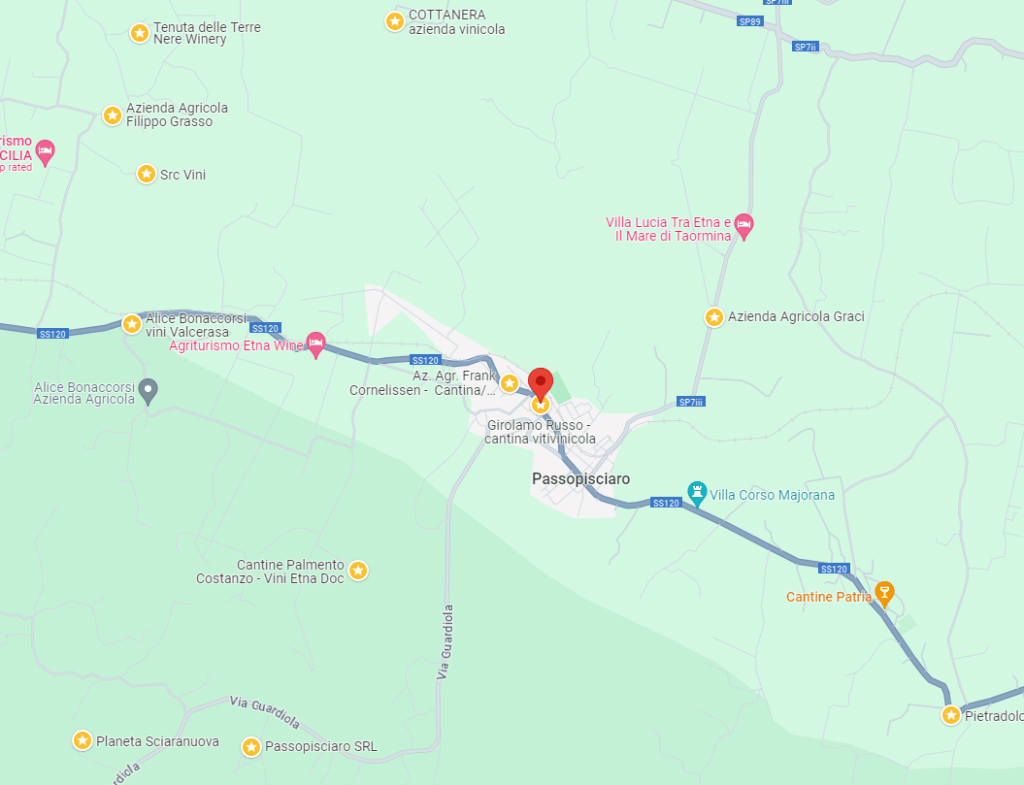
I absolutely loved this wine. And that made me VERY happy because in January 2024, we’ll be staying at an Airbnb in Passopisciaro, just down the road from this winery. Between Planeta, Palmento Costanzo, Frank Cornelissen, Filippo Grasso, Tenuta delle Terre Nere, Cottanera, and Girolamo Russo, we’ve got a lot of great wine to look forward to on the northern slopes of Mount Etna.

MY NOTES: This wine is 94% Nerello Mascalese and 6% Nerello Cappuccio. It’s a pale, very bright ruby color, with a nose of strawberries and red cherries, limited oak influence, and very earthy and mushroomy – just like a good Pinot Noir. A medium+ acid wine with medium tannins.

The Italian market, Eataly, said that this wine “has become a benchmark wine from Sicily.” I wasn’t surprised to read that. It begs for good food, and would taste amazing with pasta dishes or hard cheeses. Not bad for a $40 wine. Makes we want to try their single vineyard Etna Rosso wines: Feudo di Mezzo & San Lorenzo.

CRITICS: James Suckling gave this vintage a 94; Robert Park’s Wine Advocate a 93. $0.42/point is outside my mega-value range of ($0.15-0.30/point), but it’s not far off. Robert Parker wrote “the ‘a Rina offers terrific value with wild berry, blue flower, and crushed stone over an elegant mouthfeel. The emphasis is on freshness and balance.”

WINEMAKER NOTES: “Ruby red with an elegant nose of good complexity and notes of cherries and plums, leather and tobacco. Fresh and complex, with supple, velvety tannins and good structure. Pleasurable to drink, with lovely length.”

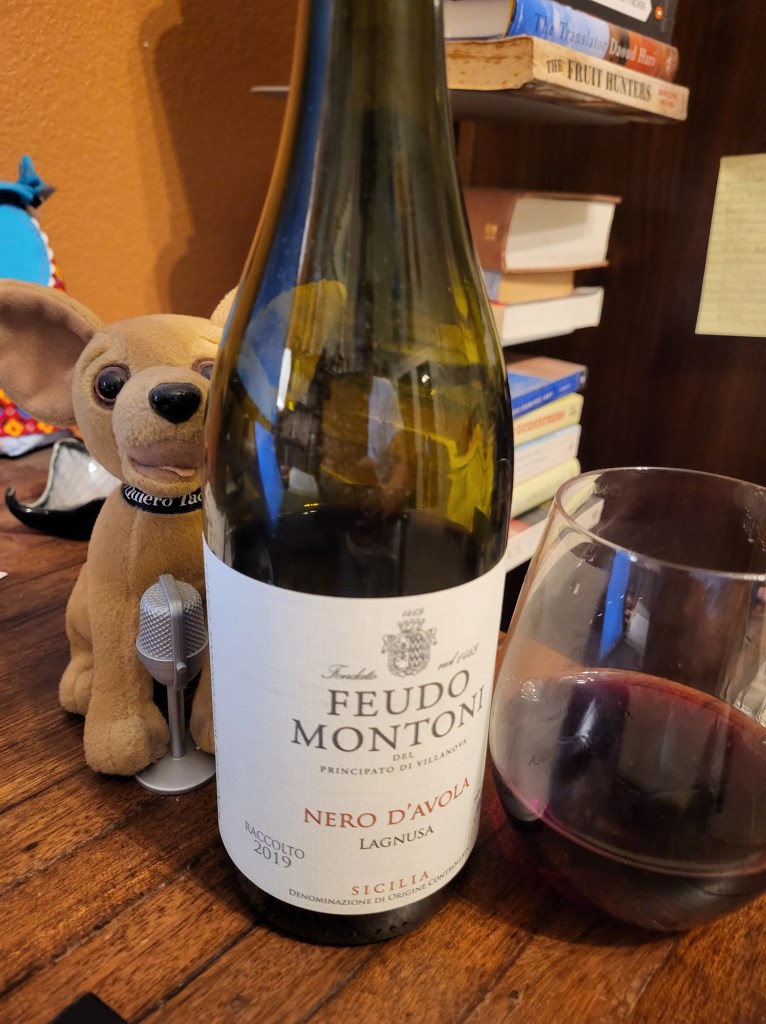
Feudo Montoni 2019 Lagnusa Nero d’Avola

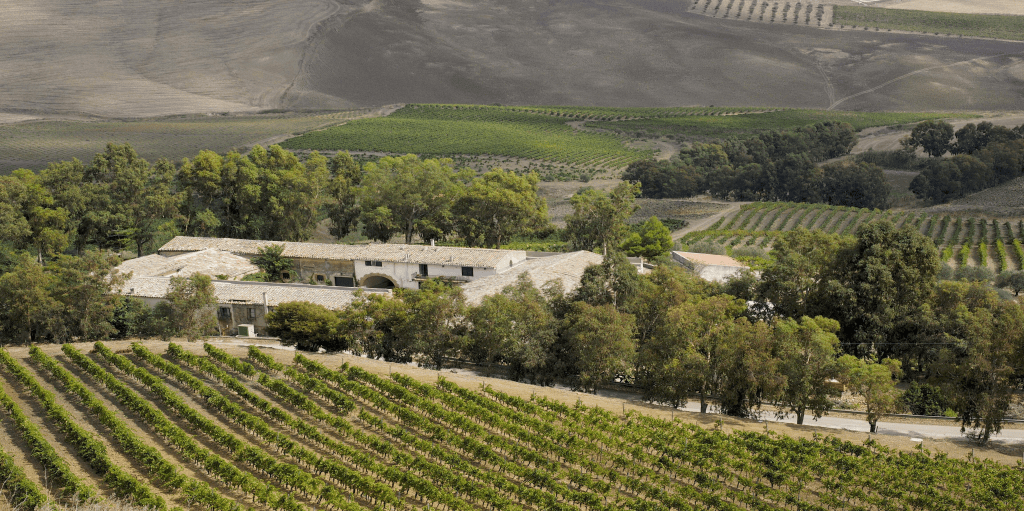
This sub-$25 wine comes from the Montoni estate near Cammarata, in the heart of Sicily. The vineyard elevation ranges from 450-750m, and the fermentation and malolactic conversion happen entirely in cement tanks. The single-vineyard wine is called Vrucara, has a gold label, and costs $50-60.

Feudo Montoni, Cammarata

This wine didn’t taste anything like the Nero d’Avolas that I had tried before. I recalled inky wines with black fruit and cassis syrup, and broad oak and vanilla flavor from barrel ageing. This was on the lighter side of medium ruby, had a ‘fruits of the forest’ flavor profile, and very mild tannins that provided a pleasant, astringent finish.

While I was drinking this wine, I kept thinking that it tasted like Barbera. As I knew from my time in Piedmont that Barbera could be a “pizza wine” or a mind-blowing, serious drink depending on the quality of grapes and the ambitions of the winemaker. So I was chuffed to read that Federico Curtaz of Fessina (with experience in both Piedmont and Sicily) joked that “Barbera is the Nero d’Avola of the North.”

I enjoyed this wine immensely, so I’m going to have to try the Vrucara when my wife and I are in Sicily. It would taste incredible with a wide variety of dishes.

WINE KNOW: Nero d’Avola (the black wine from Avola, a city on Sicily’s southeastern coast) is the 2nd-most planted variety in Sicily after the white Catarratto. It is generally a ruby-colored, high acid wine that bursts with fresh red and black berries. That said, wine styles vary considerably: some (like this wine) are light in color and luscious and fruity with no signs of oak and fine, medium tannins; many more are treated like a New World Cabernet Sauvignon and are much darker and bigger. Nero d’Avola also plays the primary role in Sicily’s only DOCG – Cerasuolo di Vittoria (the cherry-colored wine from Vittoria, a city on Sicily’s southern coast).

THE CRITICS: This wine has consistently garnered scores of 90-92 from the leading critics. The 2019 got 92 from Wines & Spirits, 91 from Wine Enthusiast, and 91 from Robert Parker’s Wine Advocate.

From W&S: “Fabio Sireci culls fruit for this wine from 35-year-old vines propagated from his ancient Vrucara plot. He ages it primarily in cement tanks, accentuating the aromas of pink petals, balsamic herbs and fresh raspberries. Those fresh red-berry and wild-herb flavors create a bold and buoyant expression of nero d’Avola that reflects Sireci’s wind-blown, high-elevation vineyards in central Sicily.

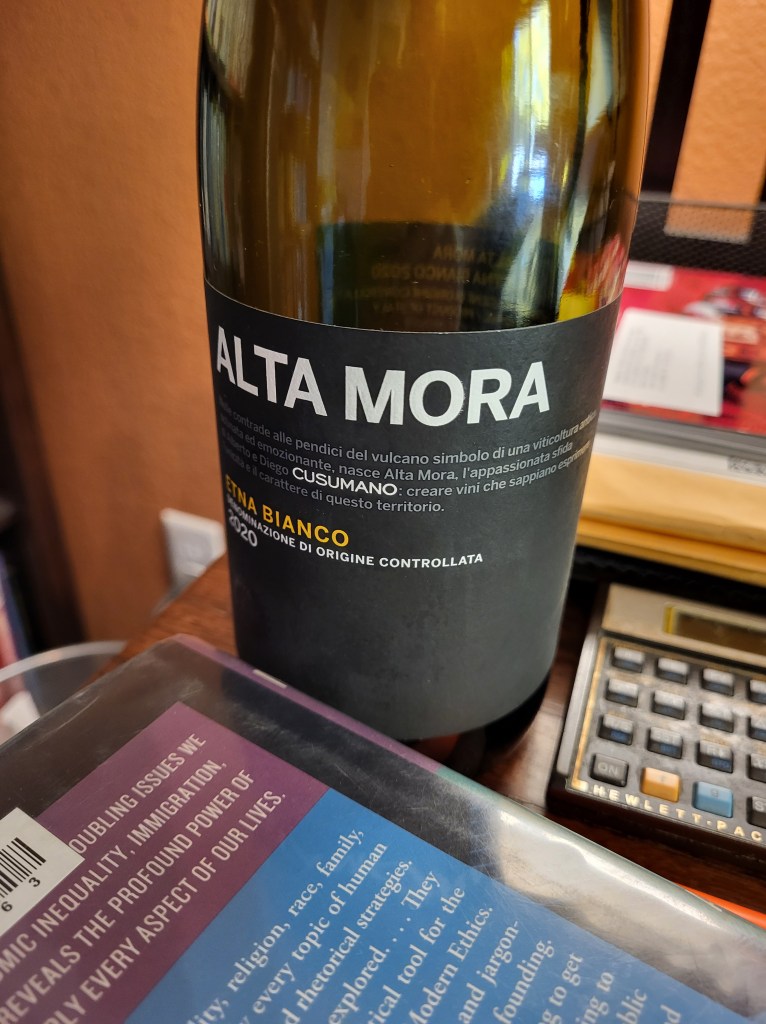
Alta Mora 2020 Etna Bianco

So far, the best Etna Bianco that I’ve tasted. 100% Carricante; $39 on Wine.com; vineyards at 600M on the north slopes of Etna. But over the next few months, I’m going to taste many more.

Alta Mora – “nelle contrade alle pendici del vulcano” (from districts on the slopes of the volcano) – comes from the Cusumano brothers.

Like the other Etna Biancos, it was light gold in color, with a nose of apple, pear and ginger. No obvious signs of oak ageing. Round in the mouth, with medium+ acidity, it struck me as tasting very similar to the Planeta Chardonnay that helped me fall in love with Sicilian wine. There’s also a slight bitterness on the finish: chalk, almonds, oyster shell?